Palm trees make excellent additions to tropical landscapes, yards, and inside rooms.
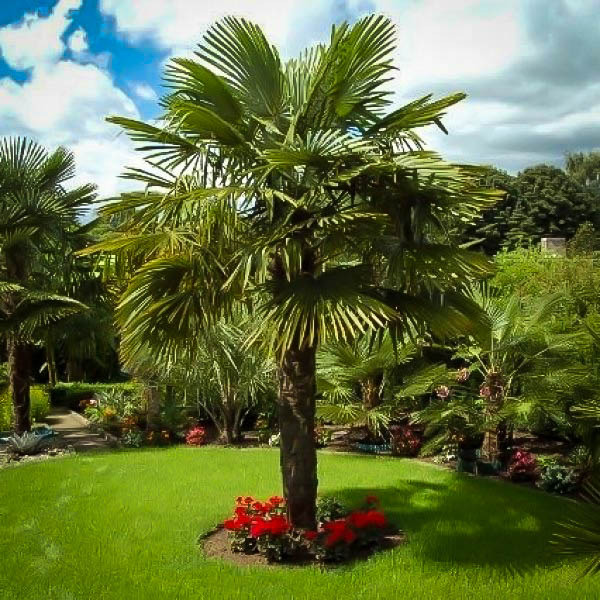
Windmill Palm Tree
Drought tolerant, cold hardy, and disease resistant, the Windmill Palm Tree beats out its tropical counterparts in overall toughness. This tropical tree can survive cold temperatures as low as 10 degrees, providing you with the perfect plant for bringing the tropics up north.
The beautiful green fronds and spiny brown trunk of the Windmill Palm brings a tropical feel to any space.
This tree requires very little watering and doesn’t need harsh chemicals or sprays to thrive.
The Windmill reaches manageable heights between 10 and 20 feet, growing indoors or out.
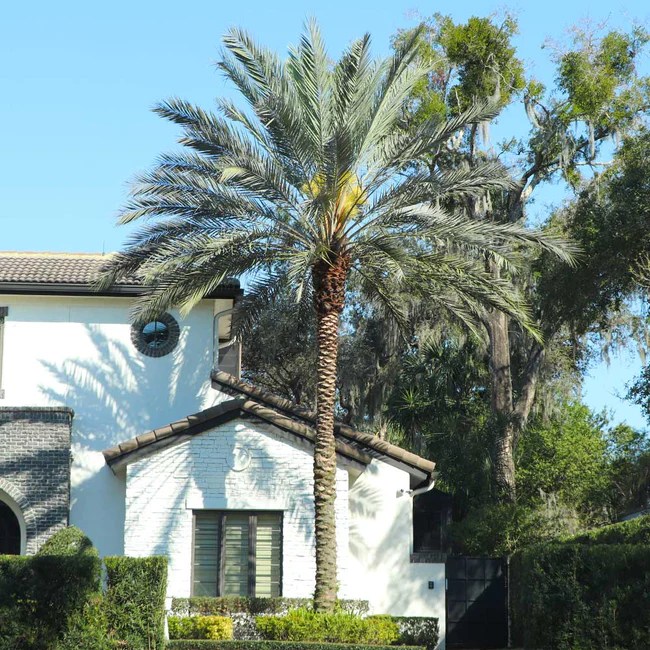
Sylvester Palm Tree
Sylvester palms are slow growers to an ultimate height of 40 feet.
They stay low to the ground while young, eventually growing an attractive trunk with diamond-shaped leaf-base scars. You can have this “diamond cut” done by a pro to get the best results.
This palm is very cold hardy – taking Zone 9 temperatures in stride. It’s also drought-tolerant as well as moderately-salt-tolerant.
The silvery blue-green fronds are a nice contrast to other, more typical greenery.
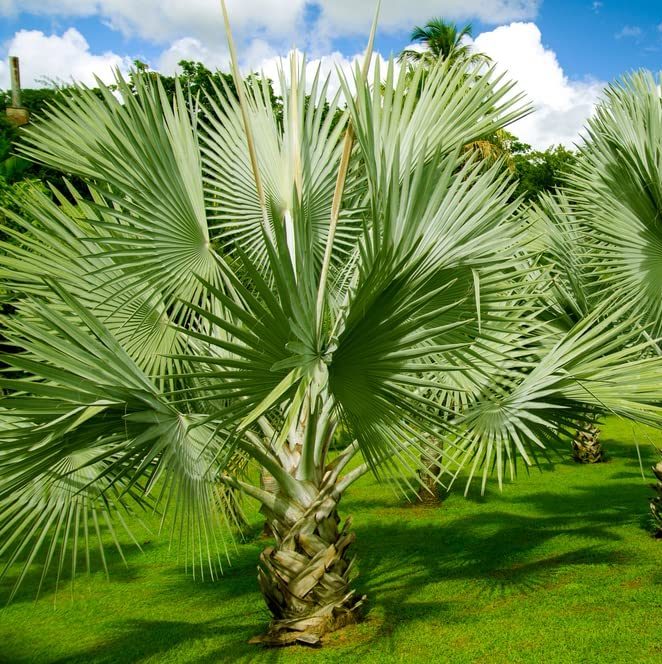
Mexican Fan Palm Tree
If you’re looking for a tall, mature palm quickly, look no further than the Mexican Fan Palm. The Mexican Fan Palmgrows up to 3 feet a year once established, delivering a tropical look to your garden in no time.
Often referred to as the Washington Palm, the Mexican Fan Palm has upright branches with leaves spread elegantly on the ends. Spread in an elegant fan silhouette with lush, light green color, the fronds of the Mexican Fan Palm catch the eye of guests and neighbors alike.
Best of all, Mexican Fan Palms are carefree, standing up to drought and tough landscape conditions with ease. Simply plant and let the sun and rainfall take care of the rest. When it comes to the Mexican Fan Palm, you won’t have to lift a finger.
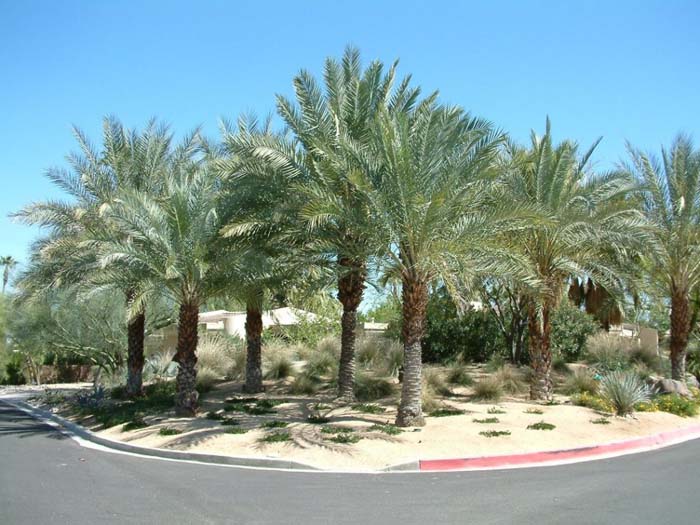
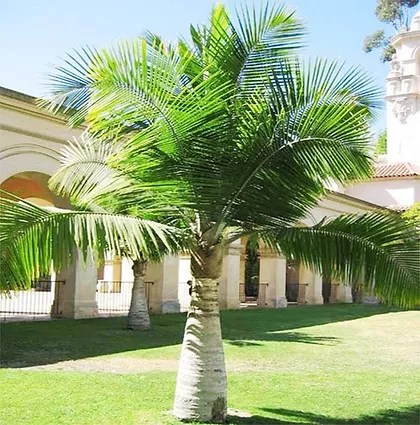
Majesty Palm Tree
Get tropical vibes in any space with the Majesty Palm Tree, a fresh take on an old favorite. With long, ultra-regal fronds in deep green hues, it’s perfect for upgrading any space indoors.
And the best part is it thrives in low light and partial shade. Simply place this exotic beauty near a window and watch the growth take off. It creates an indoor oasis wherever it’s placed. You won’t have to fuss over your Majesty Palm since it doesn’t need pruning, fertilizer or any other extras to keep growing.
Plus, your new Majesty Palm is eco-friendly because it removes toxins from the air – an all-natural process in purification. The Majesty Palm helps remove formaldehyde, carbon monoxide, and benzene from your home, making it a utilitarian and ultra-sleek plant. So, not only does it require virtually zero upkeep…but it works for you!
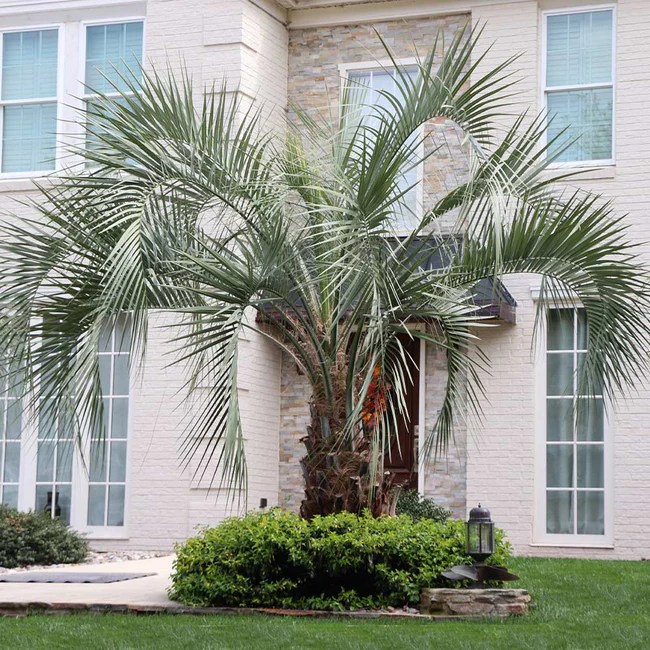
Pindo Palm Tree
Yearning to plant a Southern Palm even though you’re just North of the Mason Dixon line? Then warm up to the Pindo Palm. This date palm with desert appeal can withstand the chilliest Southern winters. And it’s a gorgeous, low-growing palm that will produce a hefty yield of juicy, amber-colored fruit in warmer climates.
Basically, its name is well-deserved. So succulent and delicious are the Pindo dates that they are often used to create savory jams and jellies, which is why the Pindo is nicknamed the Jelly Palm. But the pale green leaves are what give the Pindo its character.
Supported by inward curving fronds, the leaves are accentuated by a blue-gray sheen that gives it a distinctive look, unlike any other Palm.
Although it won’t grow beyond 20 feet in height, the leaf span can spread to an impressive 15 feet, and its trunk base can exceed 2 feet. Still, the single trunk, slow root growth and extreme drought tolerance make it an excellent candidate for container growing. Pot them up and put them on the patio, the deck, or plant them in your yard to create a relaxing Southern retreat.
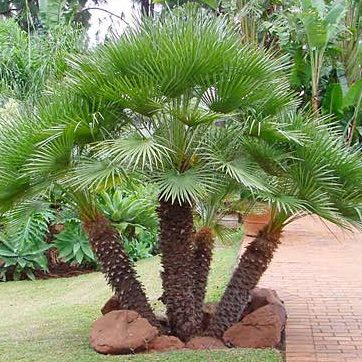
European Fan Palm
Tropical beauty, nearly anywhere. That’s what you’ll get with the European Fan Palm Tree. Its long, fan-shaped leaves grow up to 24 inches long and provide dramatic appeal to gives that undeniable tropical look.Stunning in color, the leaves of the European Fan Palm bring various greens, blues, grays and yellows to your landscape.
And since it’s uniquely shaped, it dazzles. The European Fan Palm forms trunks that can grow up to 15 feet in height. The brown textured trunks resemble a pine cone with scales running the entire length, and when this tree matures, it boasts numerous trunks which encircle the main trunk. This layering effect provides interesting depth to any area.
Best of all, it’s low-maintenance. Durable and vibrant, the European Fan Palm is one of the easiest palms to own. It’s cold hardy down to 20 degrees and is drought resistant.
This rugged beauty, with its robust demeanor, is sure to impress, especially since it can be grown in numerous settings and flourishes in various types of soil. Plus, because it’s naturally pest resistant, the European Fan Palm does not require any harmful chemicals

Sago Palm
Vibrant, feather-like foliage atop a textured brown trunk defines the Sago Palm Tree. This luxe cultivar’s fronds are thick and shiny green with the typical cascading effect of other palms. Plus, it’s actually considered a ‘living fossil’ since the species has changed very little over the last two million years. And it appears so flawless, that it is often mistaken as an artificial plant.
Even better? It’s a great plant for beginners. Left unattended the specimen will continue to grow no matter what, so Sagos are essentially a mistake-proof palm. Water requirements are similar to that of a cactus, and the soil is allowed to dry between waterings.
It thrives in bright light but will adjust to moderate light levels. Cold hardy means it’s also a great choice for an array of climates. Low-maintenance and luxe? Check.
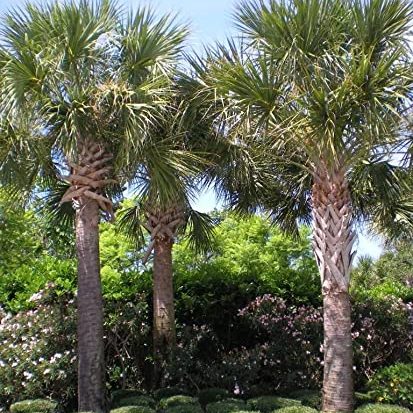
Sabal Palm
The sabal palm, also known as the cabbage palm, is native to Florida, grows throughout the state, and continues to grow north along the coast to North Carolina. These plants are fairly tolerant of salt spray on foliage but are intolerant of salt in the root zone.
Cabbage palms have curved, fan-shaped palm leaves with blades that are 3 to 4 feet long and petioles (leaf-stalks) that are 3 to 6 feet long. A full, round canopy forms atop a trunk that is 10 to 16 inches in diameter and grows to 40 feet tall. Branched inflorescences are produced in late spring and usually grow beyond the leaves, containing thousands of tiny, creamy-white, fragrant flowers that attract bees. Black fruits are produced in late summer and are consumed by wildlife. The immature leaves—sometimes called the “heart”—are edible and have a cabbage-like flavor.
 Coogan Lawn & Landscape